That washing machine repair page wants you to install malware
7 min read53 reads
A Facebook page offering washing machine repairs leads to a WhatsApp chat, a fake payment link and, when that fails, a "booking app" that is really Android malware. We pulled the app apart. Here is what it does and how to stay safe.
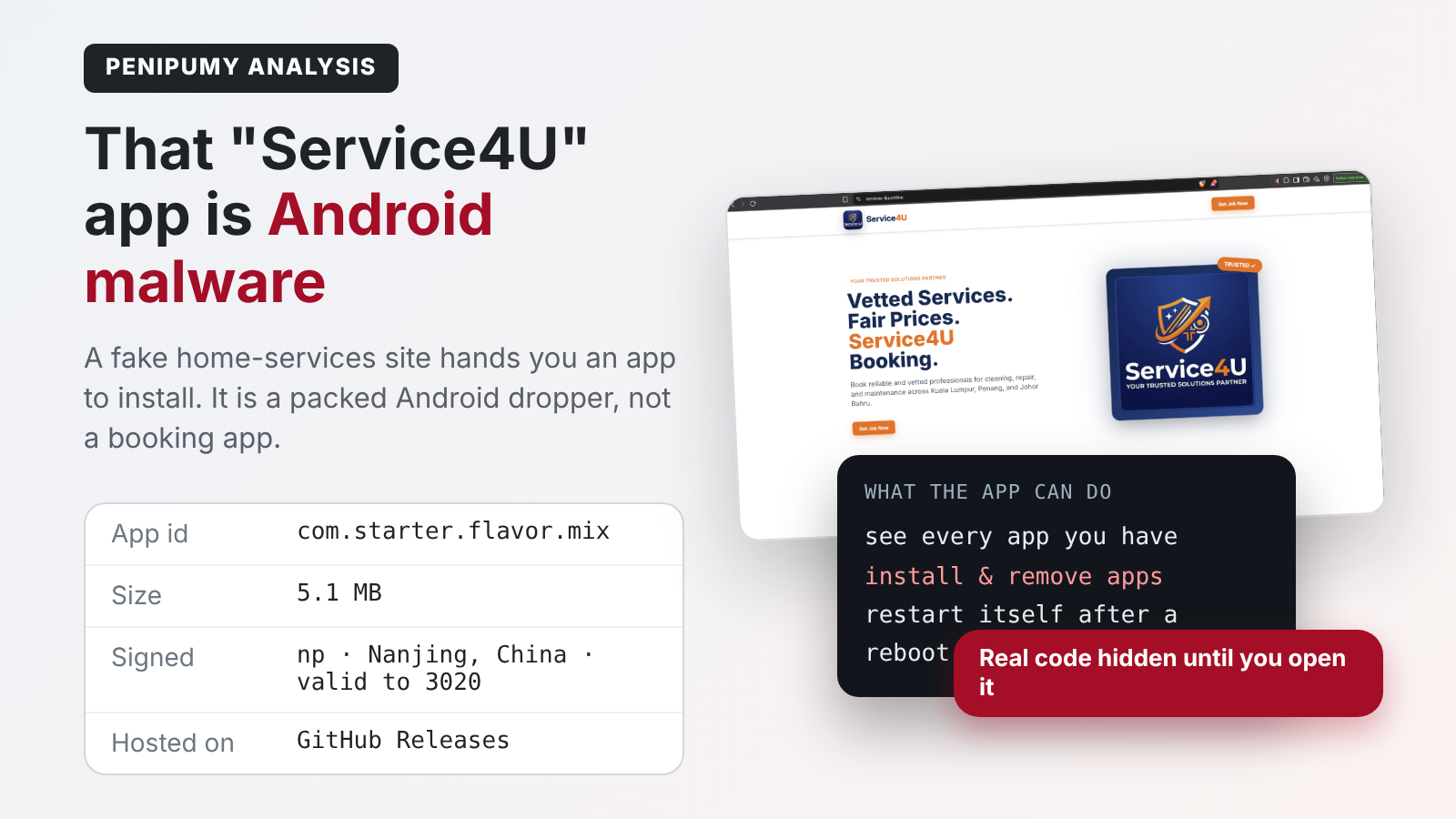
Verdict: this is a scam. If someone on WhatsApp tells you to install a "booking app" from a link, do not install it. Service4U is a hidden Android malware loader. It can install and remove other apps, see every app you have (including banking apps), and start itself again after a restart. Its real code is encrypted and only unlocked once it runs on your phone. The campaign is still active, and a new version is already being sent out.
It started with a report
On 2 November, a PenipuMY user reported the WhatsApp number 011-3335 8685, which goes by the name "ProCuci Servis". They wrote that it was posing as a service business, sent them a phishing link and asked them to install an Android app. Our team verified the report, then followed the link to see what the app really was.
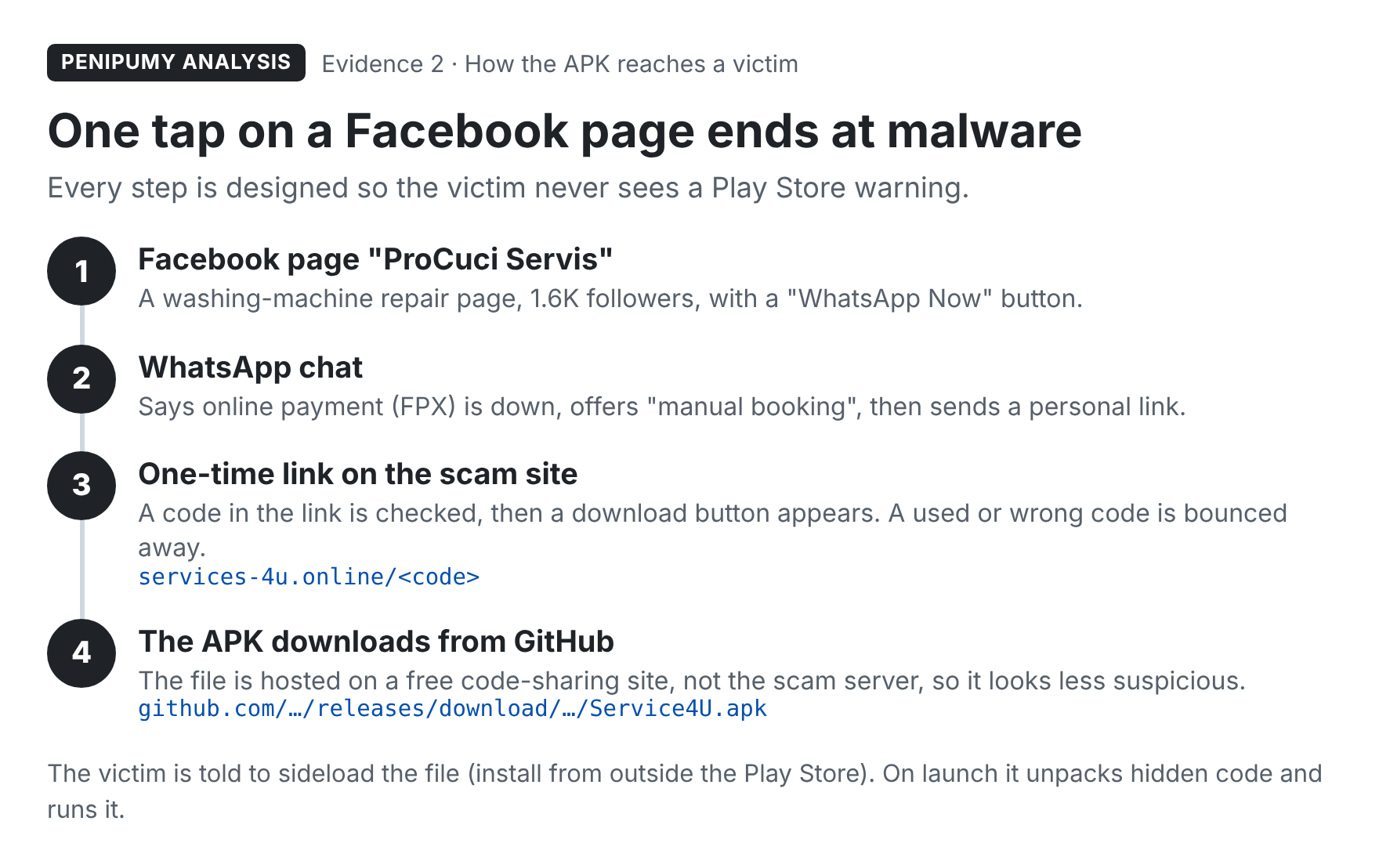
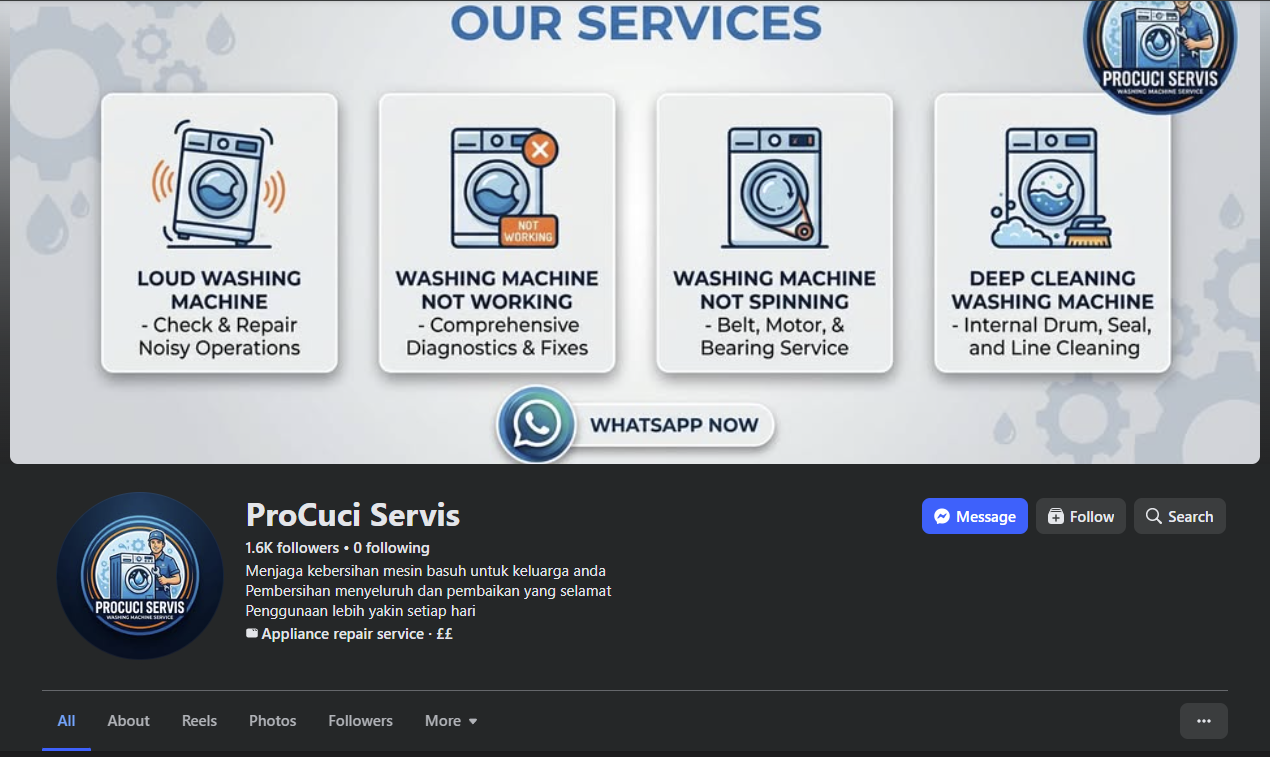
It is called "ProCuci Servis" and looks like a normal washing machine repair business: 1.6K followers, friendly Malay captions, and a big "WhatsApp Now" button.
A fake payment link first
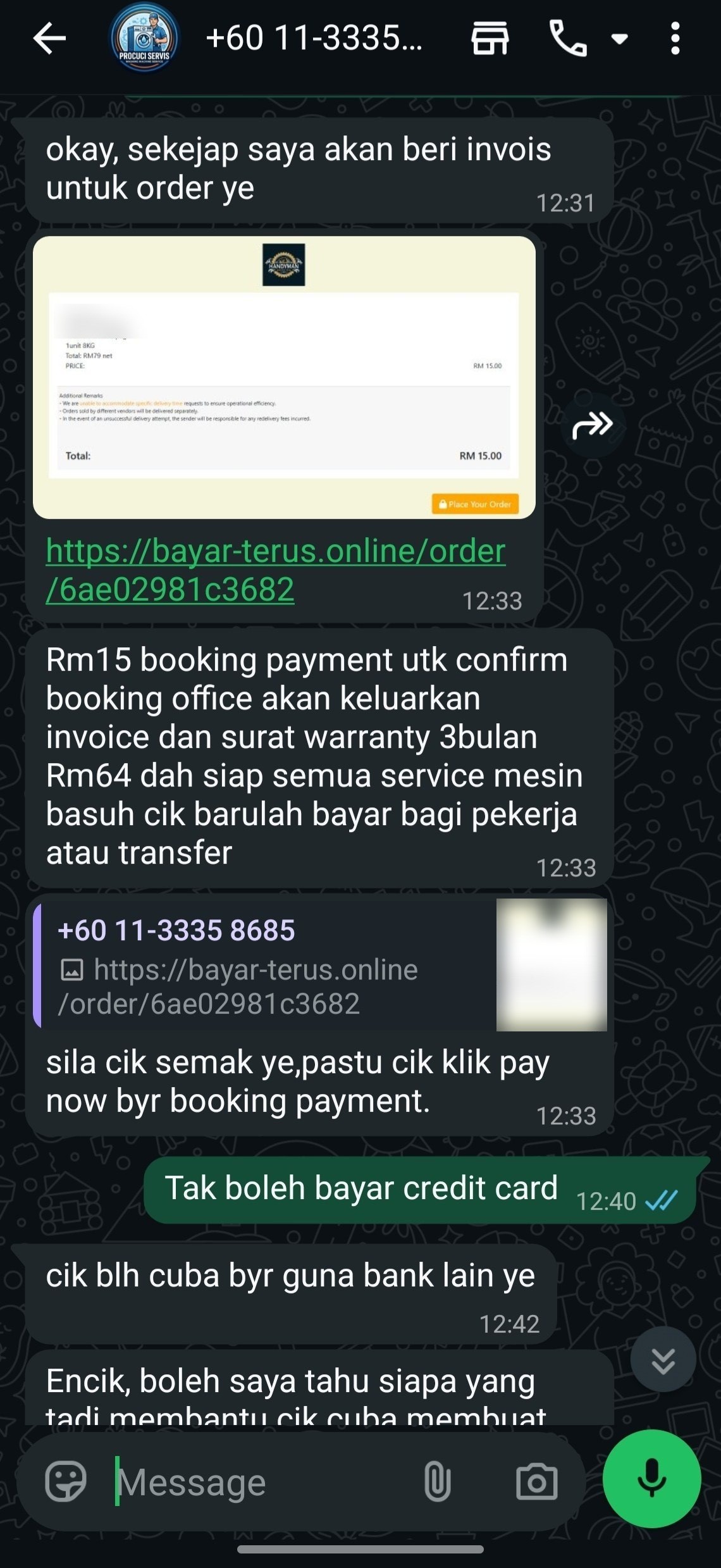
The "shop" replies from 011-3335 8685 and sends an "invoice" link on bayar-terus[.]online asking for a RM15 "booking payment". The rest (RM64) is supposedly paid only after the job is done, with a "3 month warranty" thrown in to sound legitimate.
"FPX is down, please book manually"
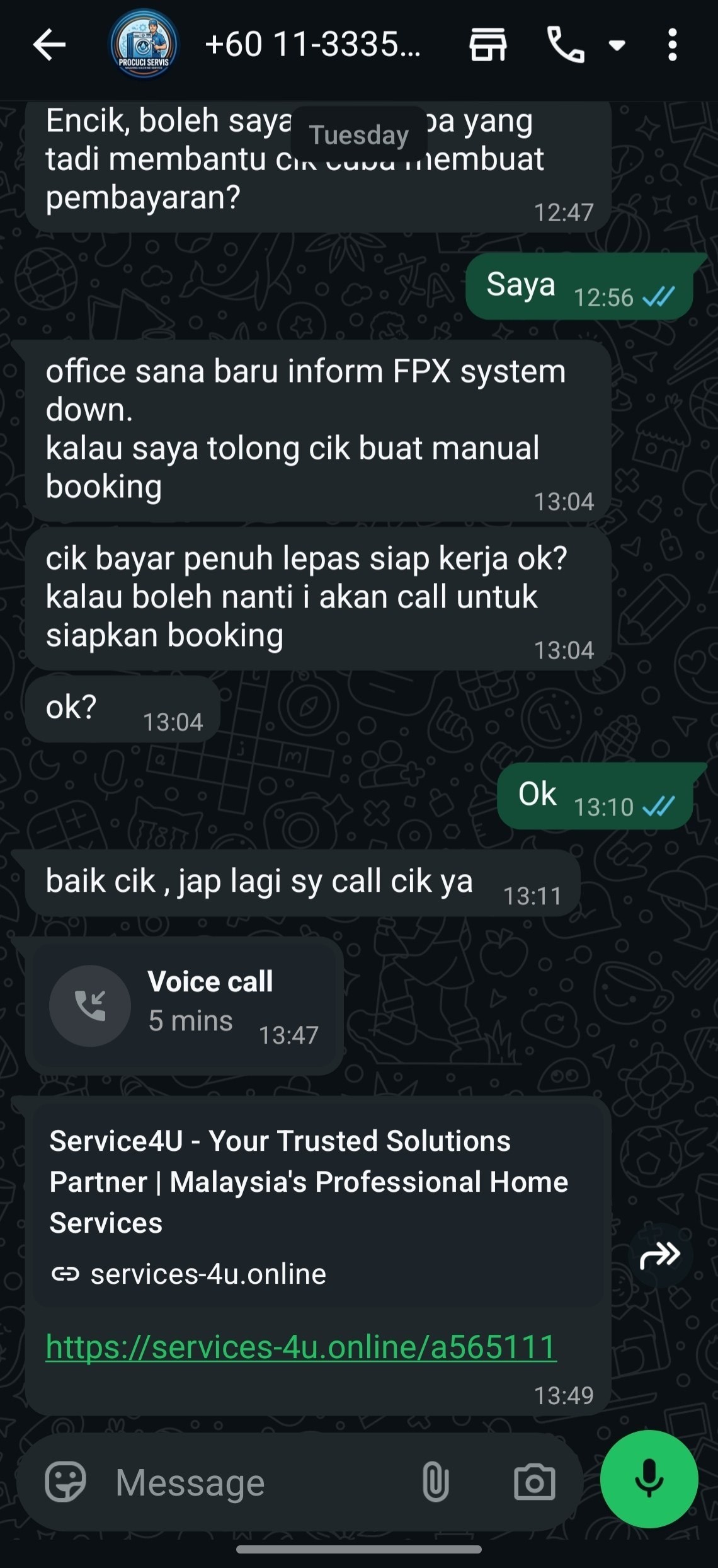
When the payment does not go through, they'll say their office has just been told the FPX system is down. They offer to do a "manual booking" and promise you can pay in full after the work is done. Then they call you. In the case reported to us, the call lasted five minutes.
A personal link
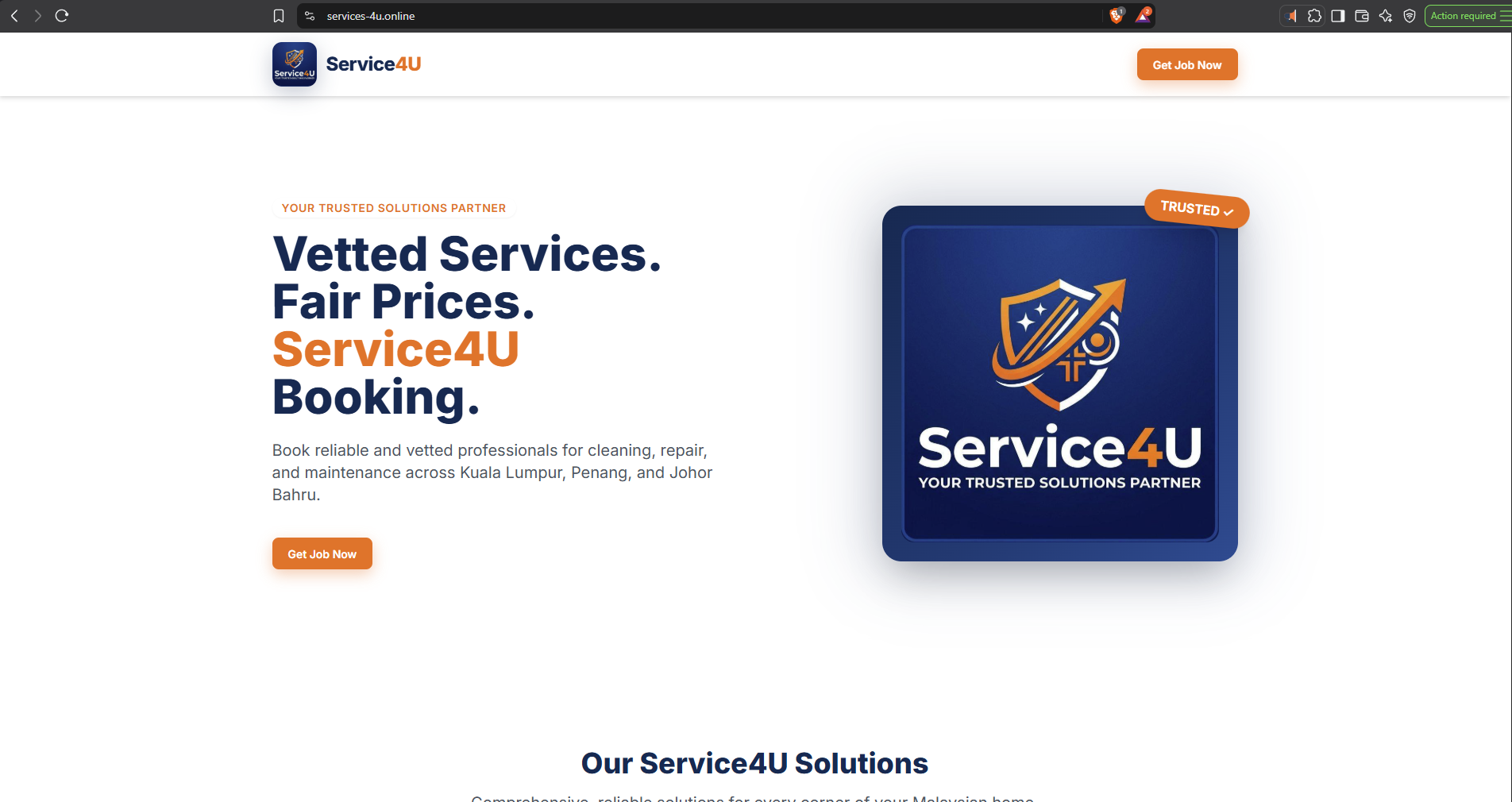
You get a link to services-4u[.]online with a short code at the end. The site looks like a polished home services company covering Kuala Lumpur, Penang and Johor Bahru, with a "Get Job Now" button.
The download
The button downloads an APK file, and you are told to install it from outside the Play Store. Once installed and opened, the app quietly unpacks its hidden code and runs it.
The fake RM15 "booking payment" link. Victim details blurred."FPX system down", a five-minute call, then the Service4U link.
So there are two traps in one chat. First a fake payment page that tries to take your card or bank details. If that fails, a malware app that can take over the phone itself.
The payment link is on a site that is now offline. We could not see what it showed. But in September our URL scanner caught a page on a similarly named domain, bayartepat[.]online, using the same /order/ link format. It was a brand new site posing as a checkout page, and our scanner has its page design flagged as a scam template.
Why both? A stolen card alone is often not enough, because the bank sends an OTP to the victim's phone. Malware of this kind usually reads SMS and notifications, which would let the scammers capture that OTP and complete the charge themselves. We could not confirm this from the encrypted code, but it is the most likely reason the same chat pushes a payment page first and an app second.
The "ProCuci Servis" Facebook page.The Service4U website the link opens.
How we got the app
Each victim link only works once. A used or wrong code is sent somewhere else, so the app is hard to get hold of after the fact.
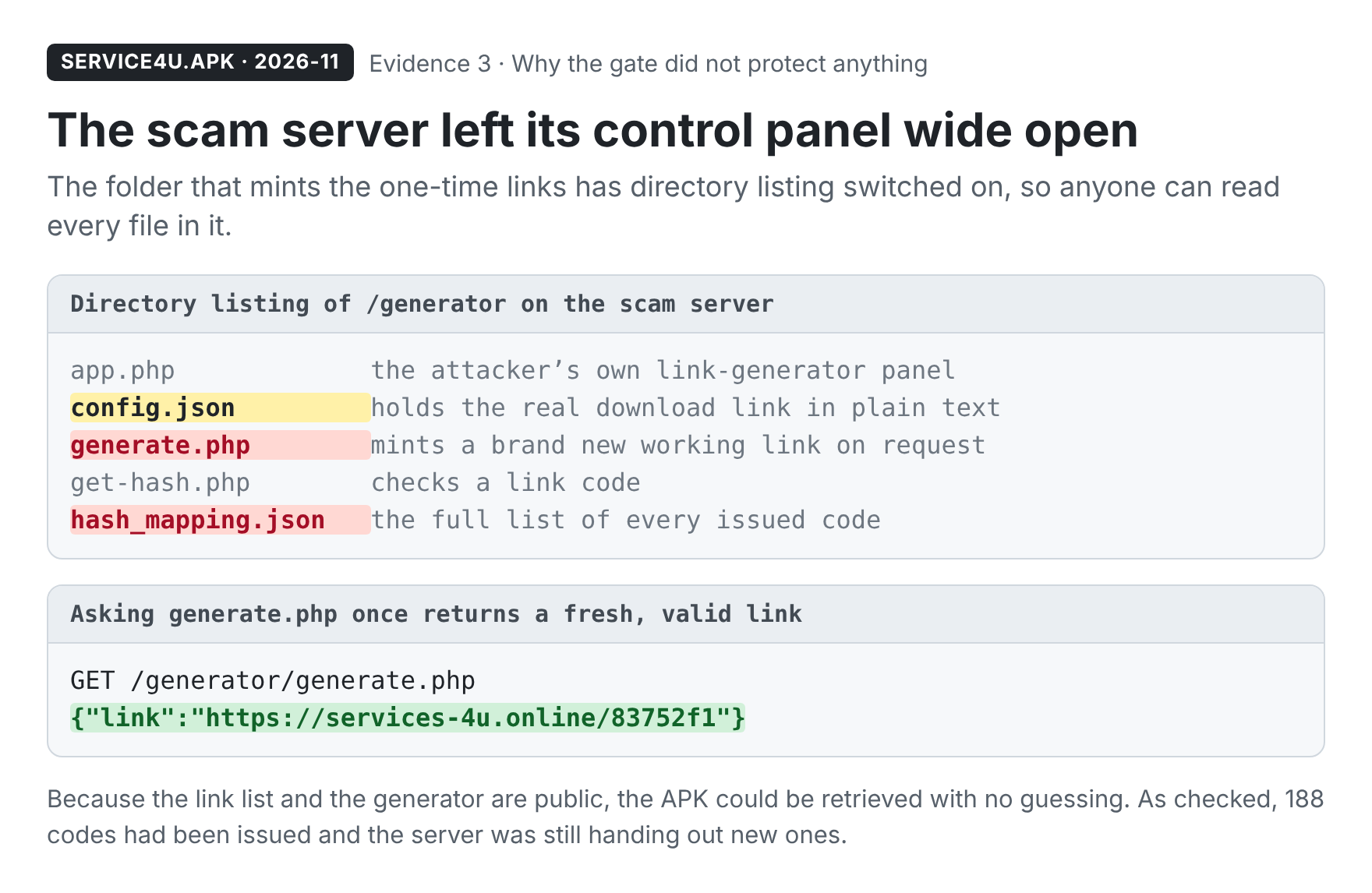
We did not need to guess any codes. The scam server left one of its folders wide open to the public. Inside it was the operators' own link generator, plus a plain list of every link they had issued and where each one downloads from.
The scam server's open folder.
That list also shows the scale. On 2 November it held 136 issued links. By 4 November it held 188, and new links were still being created. Not every code is a victim (some are tests, and a few were created during our own analysis), but the steady growth shows the operators are actively sending it out.
The malware sits on GitHub
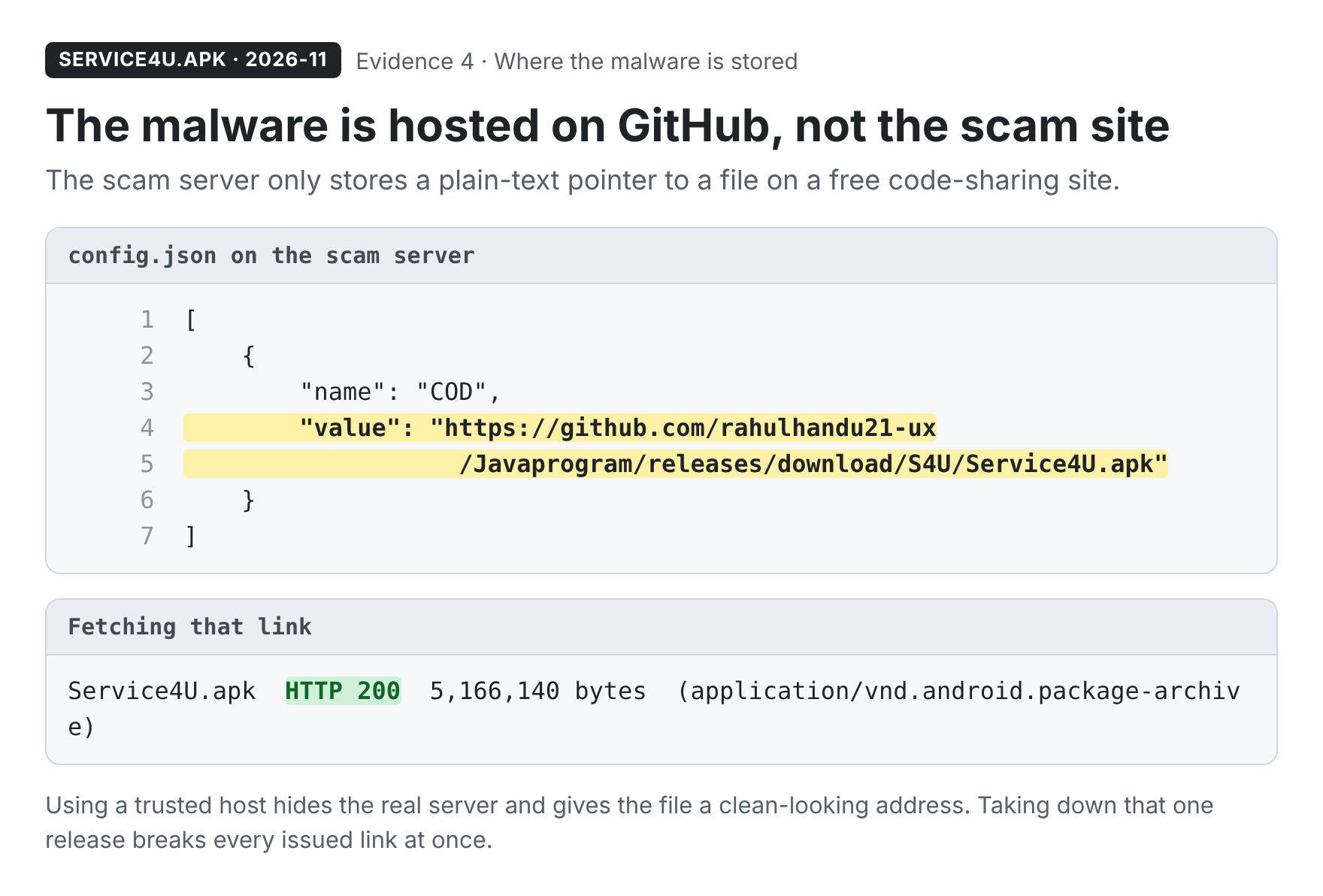
The app is not stored on the scam website. It is uploaded to GitHub, a popular site for sharing code, and the scam site simply points to it. This makes the download look less suspicious and costs the operators nothing.
The scam site's config points straight to GitHub.The GitHub release holding the app.
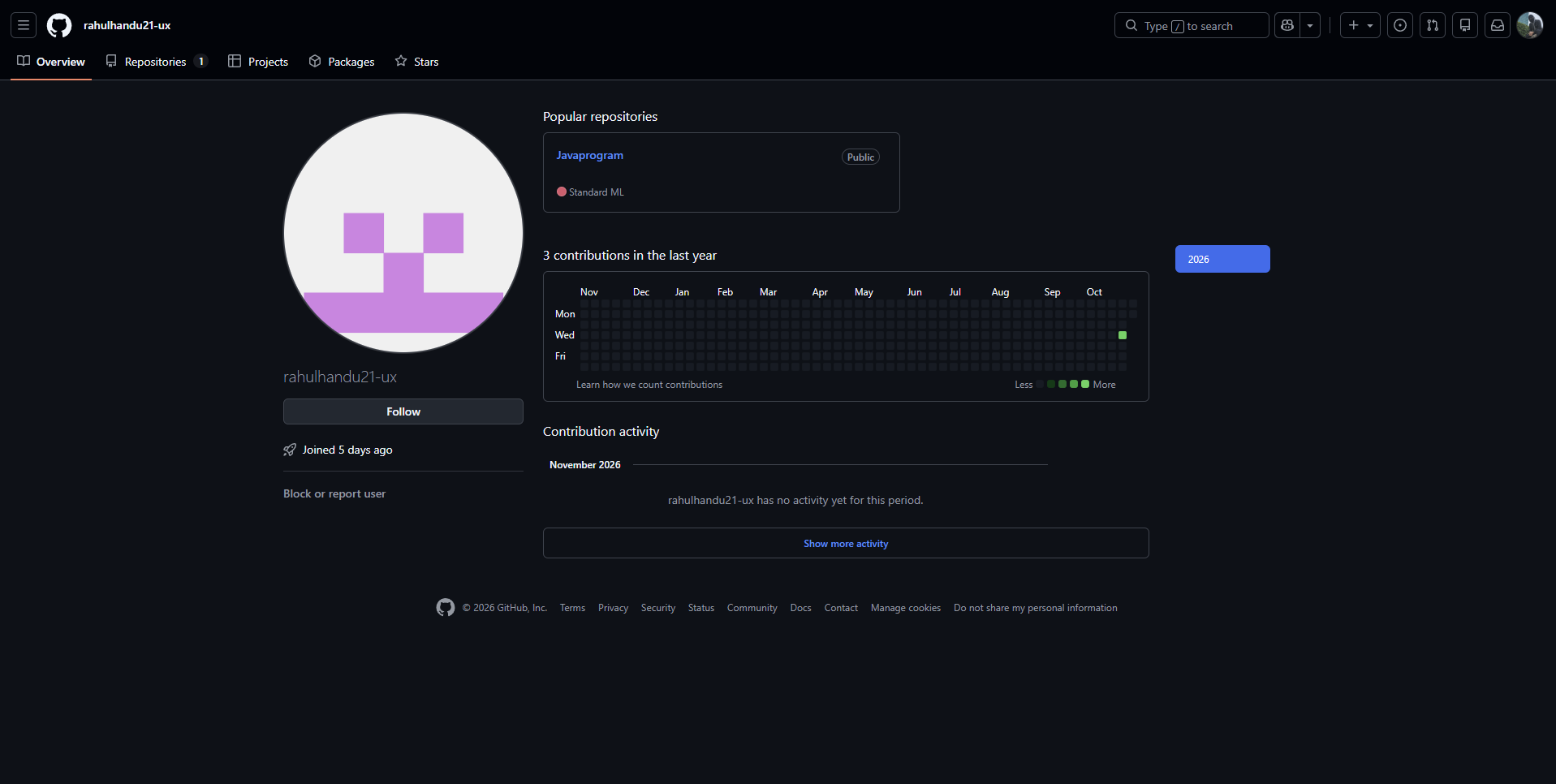
The GitHub account hosting it was created just five days before our analysis and has only this one project.
A five-day-old account with one project.
Who signed it
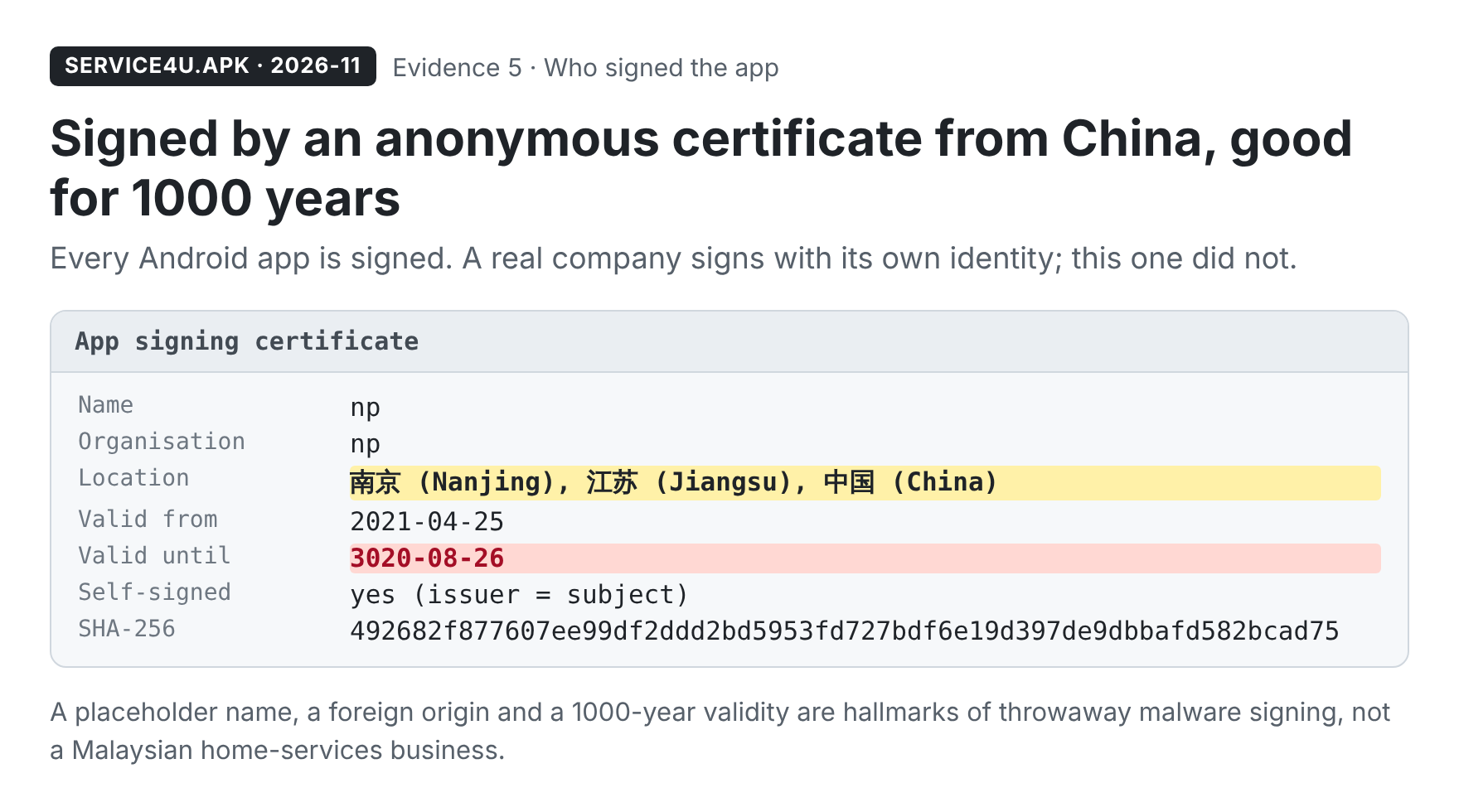
Every Android app is signed by its maker. This one is signed with an anonymous certificate: every name field just says "np", the location is Nanjing, China, and it is valid for 1,000 years, until the year 3020. A real business does not sign its app like this. It is a common sign of a malware building kit.
Anonymous certificate, valid until 3020.
What it asks for
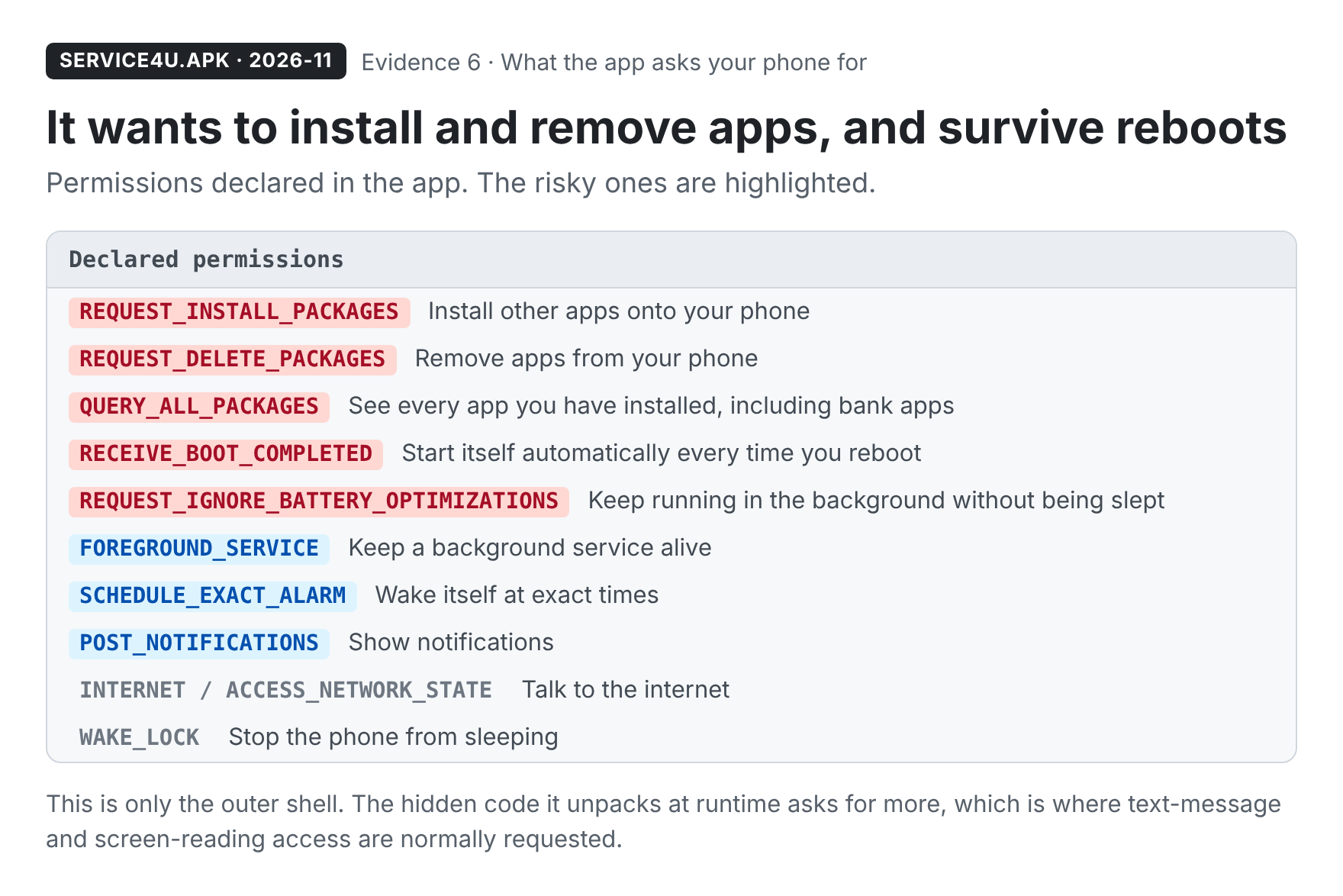
A booking app needs very little. This one asks to:
Install and remove other apps on your phone.
See every app you have installed including your banking apps.
Start again after a restart and ignore battery saving, so it keeps running in the background.
And this is only the outer shell. The hidden code inside asks for more once it runs. In malware like this, that is usually where requests for SMS access (to read your OTPs) and Accessibility access (to see and control your screen) appear.
The real code is hidden
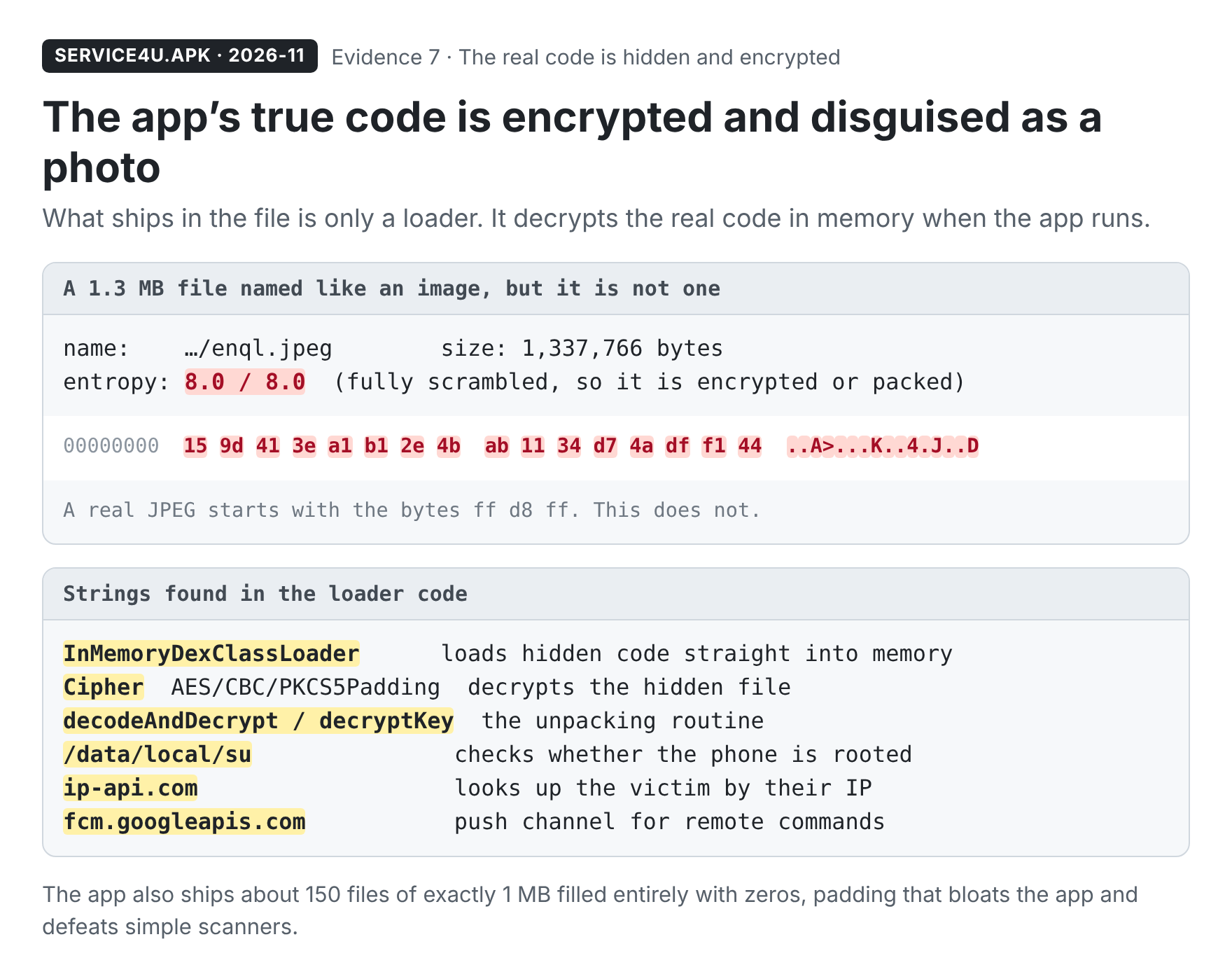
The app carries its real code in a file pretending to be a photo. It is not a photo. It is fully encrypted data. When the app runs, it decrypts this file and loads it straight into memory, so the real code never appears as a normal file on your phone where security tools could easily inspect it.
Checks whether your phone is rooted.
Looks up your location from your internet connection.
Uses Google's push notification service as a way to receive commands.
Is stuffed with junk and fake files to confuse analysis tools.
Because the real code is locked until it runs on a victim's phone, we cannot say with certainty what it does in the end. But everything we can see (a fake service, a hidden encrypted payload, the ability to install apps, persistence after restart) matches the pattern of Android banking and remote access trojans, which steal banking logins and OTPs.
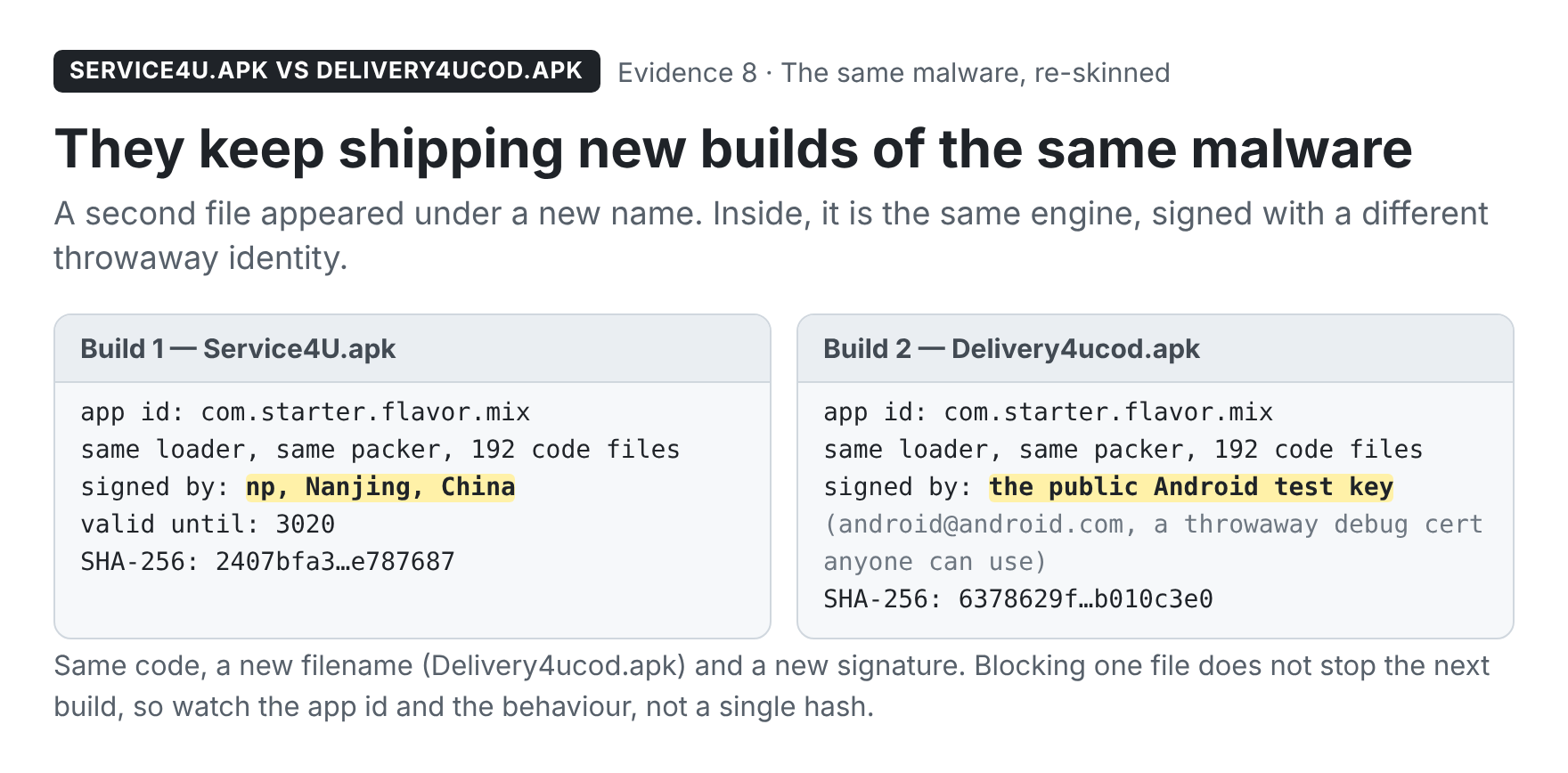
They are already shipping a new version
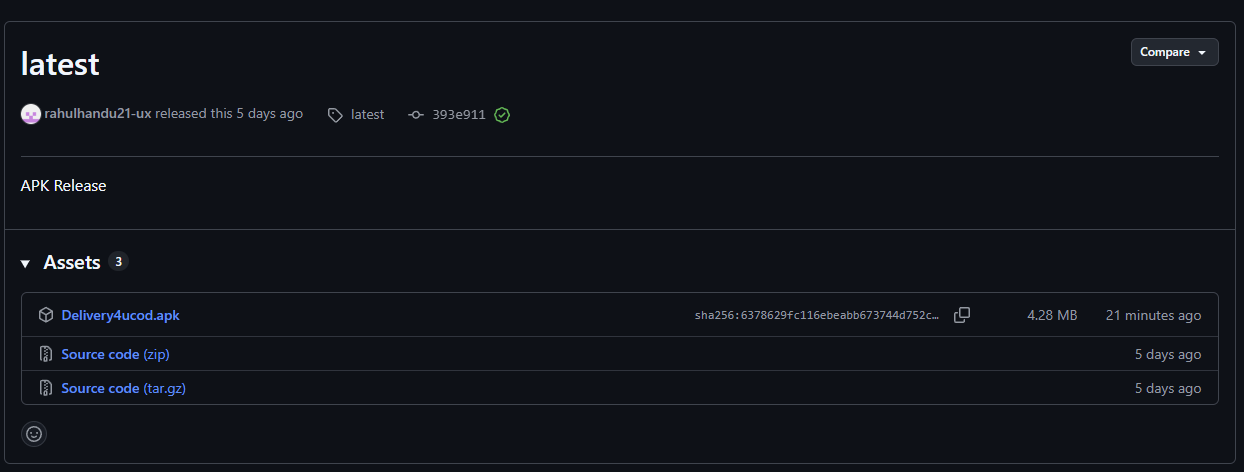
The same GitHub project now holds a second app, Delivery4ucod.apk. Inside, it is the same malware engine. This time it is signed with a public Android test key that anyone can use, not the China certificate.
The lesson: the operators change names, files and signatures between versions. Do not trust that an app is safe just because its name is different from one you saw in a warning.
How to stay safe
Never install an app sent over WhatsApp, Telegram or SMS, or from a link. Get apps from the Google Play Store only.
Do not pay a "booking fee" through a link sent on WhatsApp. Real repair shops collect payment at the job or through a proper invoice.
"Please install our app to book" is a scam line. A real business will not ask you to install an app to make a booking.
Be wary of Facebook service pages that move you straight to WhatsApp, especially new pages with stock-style graphics and no real address.
Check the number or link on PenipuMY before you pay or install anything.
If you already installed it
Turn on airplane mode right away
Uninstall the app
Settings, Apps, find "Service4U" or any app you do not recognise.
Change your passwords from a different device
Start with online banking, then other important accounts.
Call your bank's fraud line
Tell them your phone may be compromised.
Consider a factory reset
If you entered any banking details or saw strange activity.
Report it to NSRC at 997
If money was lost.
Indicators of compromise
For security teams and researchers. Links are defanged.
+60 11-3335 8685 ("ProCuci Servis", reported on PenipuMY)
services-4u[.]online
bayar-terus[.]online (fake RM15 "booking payment" page, now offline)
bayartepat[.]online (similar name and link format, fake checkout flagged by PenipuMY scanner, Sep 2026)
github[.]com/rahulhandu21-ux/Javaprogram (hosts the APK)
github[.]com/vickystatuswala-arch/apkstorage (named in config, now dead)
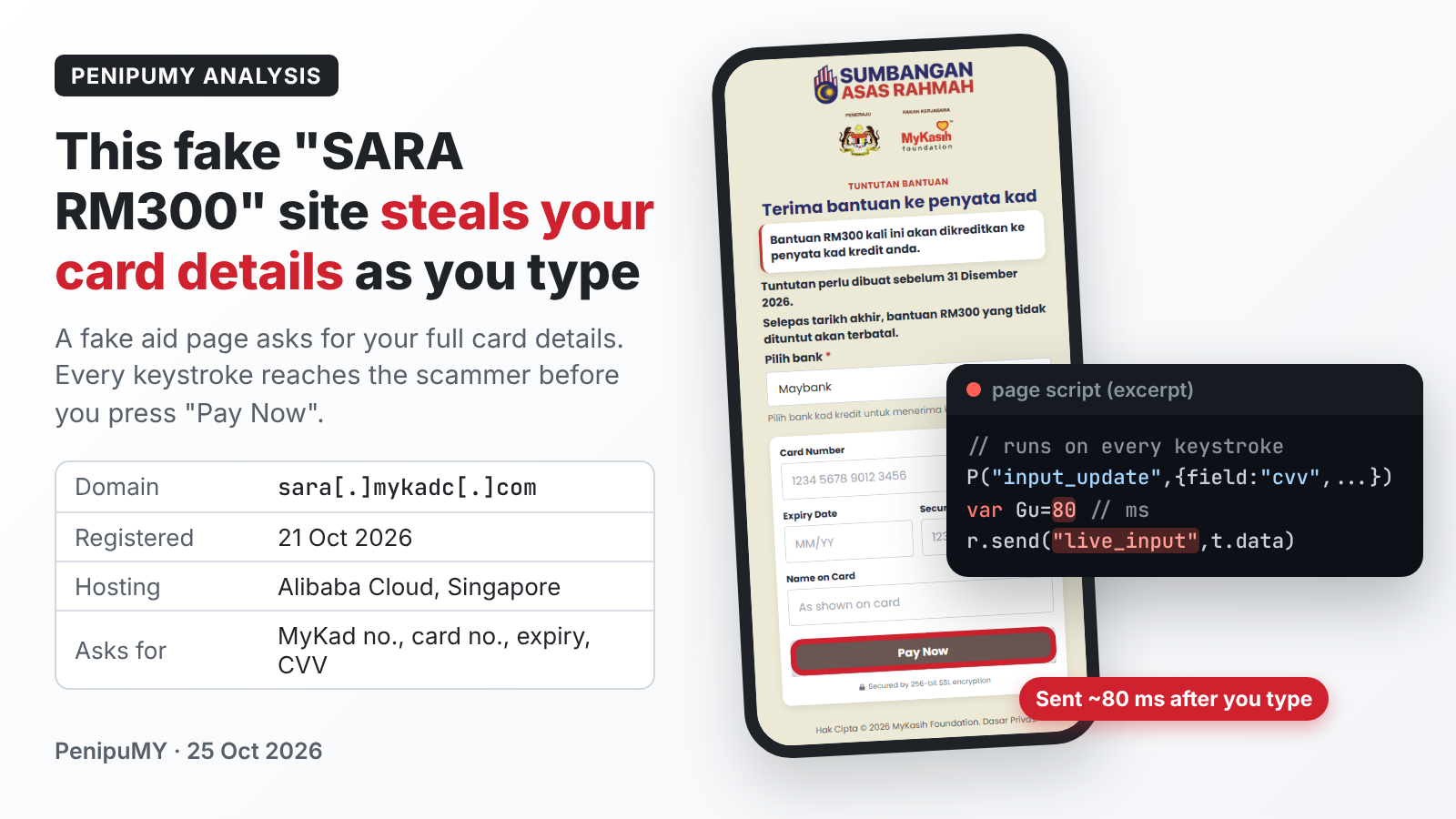
This fake "SARA RM300" site steals your card details as you type
A message says RM300 SARA aid is in your MyKad. The link opens a fake portal that sends your card details to the scammer as you type, before you press "Pay Now".
9 min read76 reads
Awareness
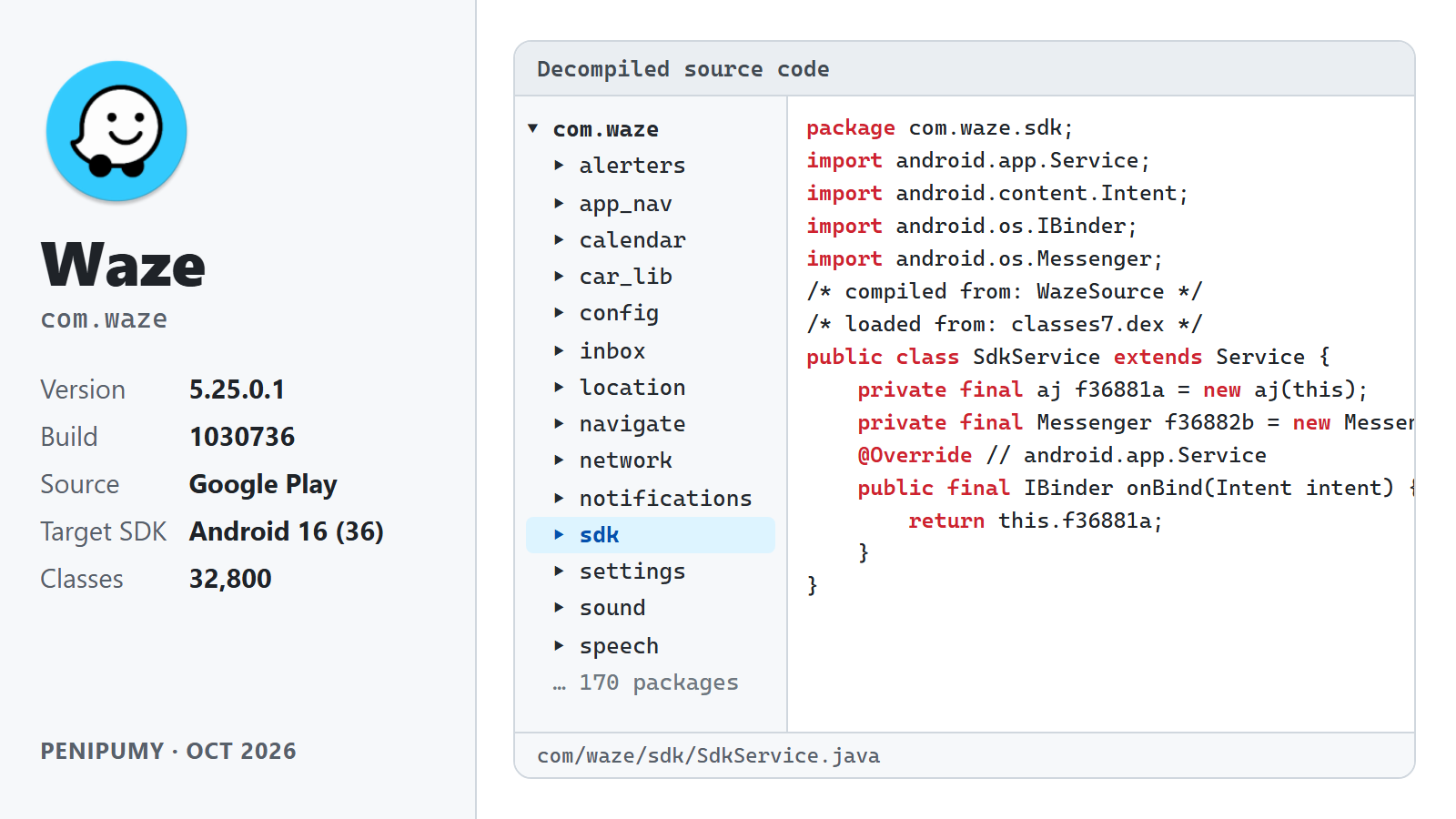
We Looked Inside Waze: Is It Spying on Malaysians?
The government has barred civil servants from using Waze. We pulled the app apart to see what it actually does with your phone, and where the real risk is.
6 min read391 reads
Awareness
Fake PAIP Berhad Site Stealing Pahang Customers' Data and Water Bill Payments
onlinepaip.com is impersonating PAIP Berhad to steal personal info and water bill payments. Here's how to spot it and what to do if you've been targeted.